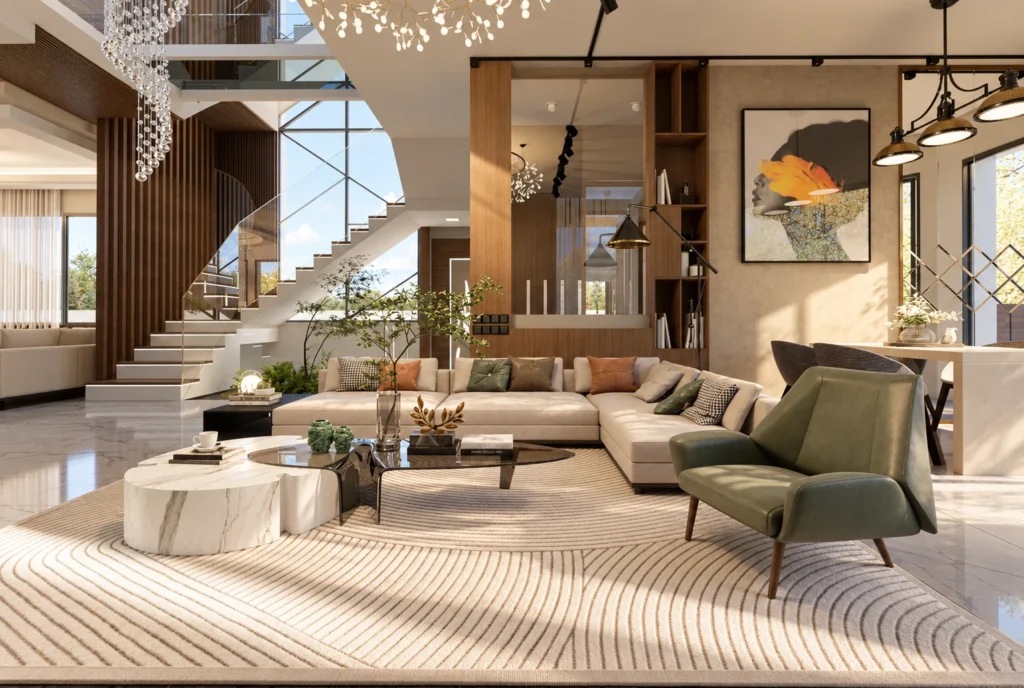
Observe the light
A colour changes with orientation, time of day and artificial lighting. Before finalising your palette, observe the room at different times. Test materials and colours together in the actual setting rather than deciding from a photograph alone.
Build a clear palette
Define a base, a leading material and a few accents. Neutral tones can give textures room to stand out; a stronger colour can highlight a piece of furniture or a particular area. The aim is to create rhythm without adding too many elements that compete for attention.
Match materials to daily use
The choice of flooring, wall finishes or textiles depends on where they will be used and how they will be maintained. Discuss durability, installation conditions and manufacturer recommendations with the people involved. A beautiful material becomes a suitable choice when it also fits everyday life.
Make room for local details
Wood, mineral textures, patterns and crafted pieces can sit alongside contemporary lines. Choose these elements for their role in the project, quality and proportion. A carefully placed detail often adds more character than an accumulation of decorative references.
Review the composition in 3D
3D renderings help compare combinations of materials and colours at the scale of the room. They support discussions before implementation but remain representations: physical samples are useful for confirming colours and finishes. Explore our villa projects in Rabat to discover different atmospheres.